
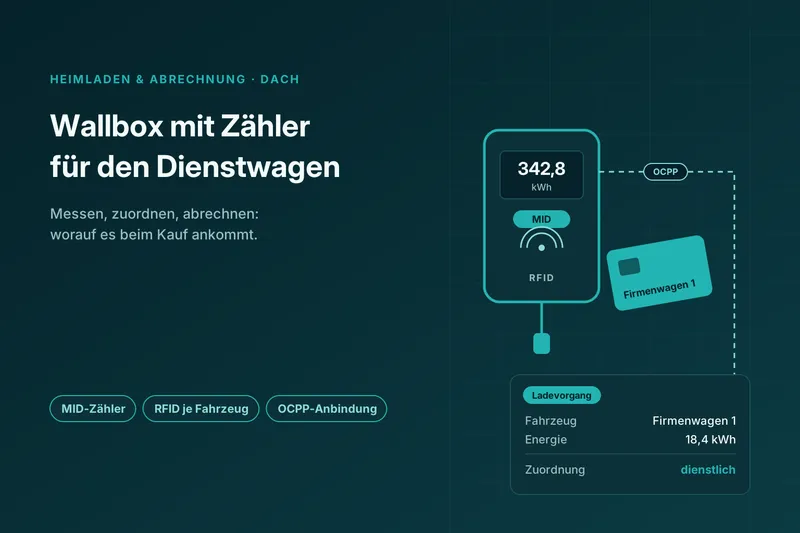
Wallbox with a meter for company cars: metering, assignment and billing
Charging a company car at home takes more than just any wallbox. For the employer to reimburse the electricity tax-free, the wallbox must measure the energy and assign every charging session to the company car. Which meter fits in Germany, Austria and Switzerland, when RFID is needed, whether a mobile wallbox is enough and who pays for the wallbox.
 Umut KayaCEO
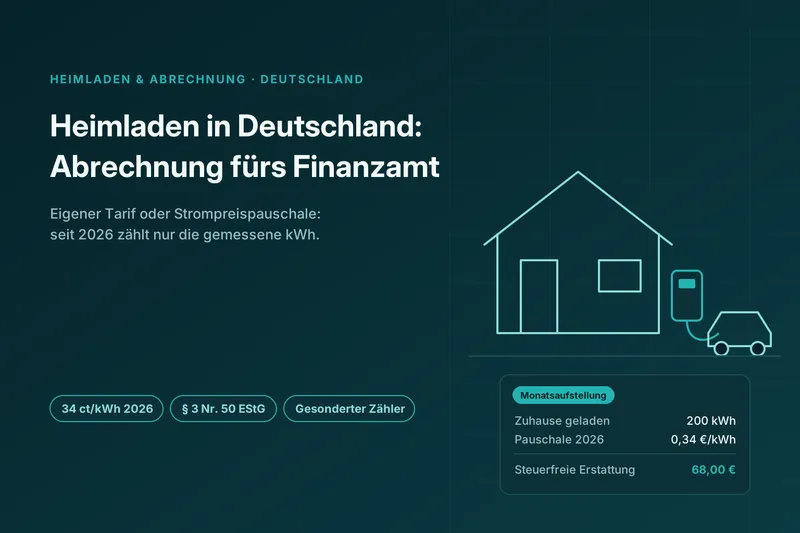
Charging a company car at home in Germany: tax-free reimbursement since 2026
Since 1 January 2026, Germany no longer has a monthly flat rate for charging a company car at home. Employers only reimburse proven kilowatt hours, either at the employee's own electricity tariff or at the electricity price flat rate of 34 cents. Which method fits when, how to prove the amount of electricity and how the amount gets into payroll.
Umut KayaCEO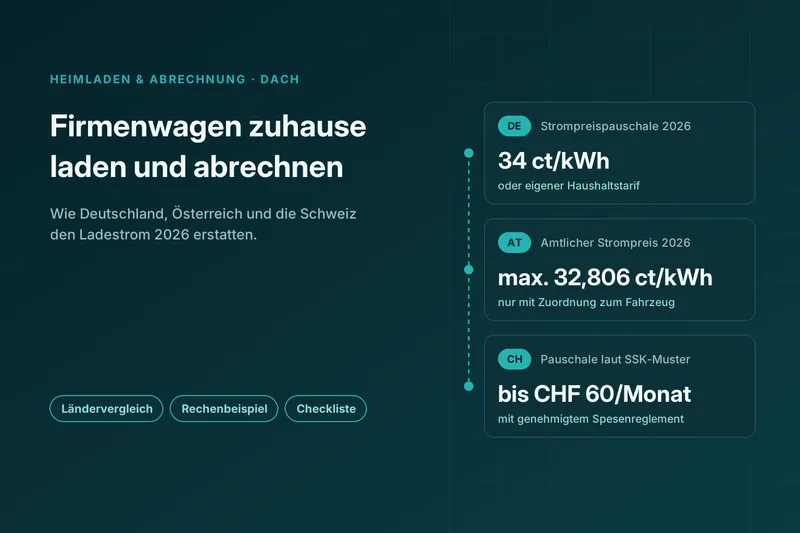
Charging company cars at home: billing in Germany, Austria and Switzerland
This article is aimed at fleet management, payroll and management when employees charge their company car at home and billing runs through the company. In Germany and Austria, every wallbox at an employee's home becomes a data source that has to be evaluated and checked regularly. After reading, you will know which rule applies in your country, which data you need and how to set up the process from the wallbox to payout. As of October 2026, all amounts are referenced with sources at the end.
Umut KayaCEO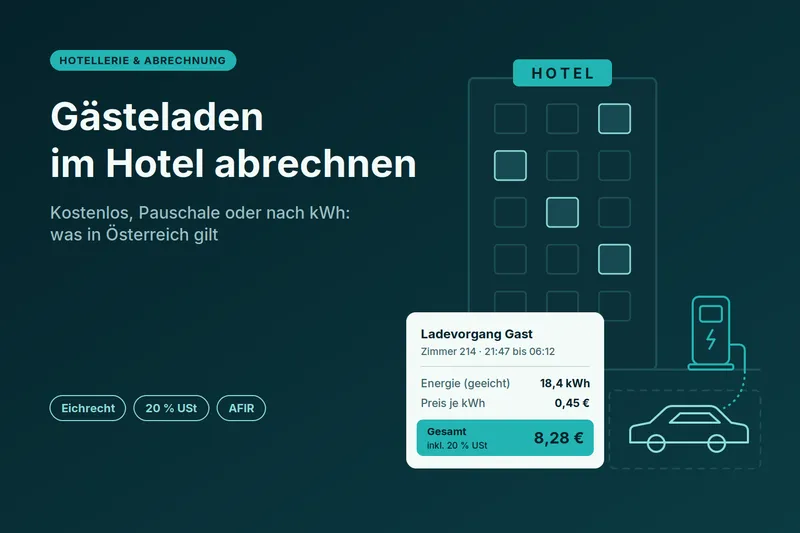
EV charging at hotels: how to bill your guests correctly
More and more guests arrive by electric car and expect to be able to charge at the hotel. But how do you bill for charging fairly, in a legally compliant way and without extra work at reception? This article shows the permitted billing models in Austria, the legal ground rules and a concrete worked example.
Umut KayaCEO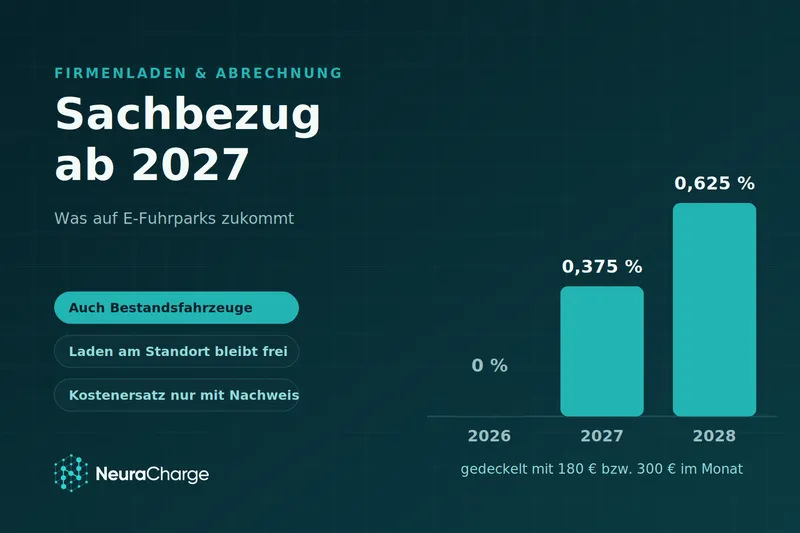
Benefit in kind for electric company cars from 2027: what fleets need to know
Austria's zero benefit in kind for electric company cars is ending. From 2027 it is 0.375 percent of the purchase price, from 2028 it is 0.625 percent. Vehicles already in the fleet are affected too.
Umut KayaCEO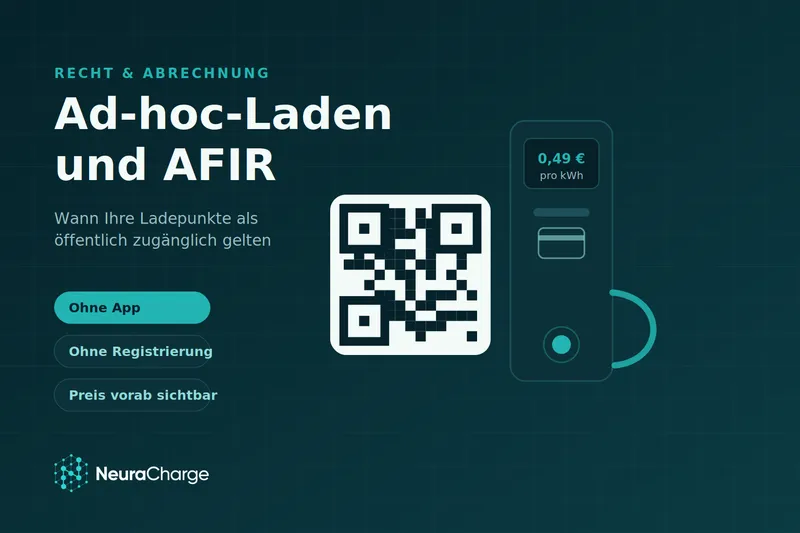
Ad hoc charging: when your charge points count as publicly accessible
Many operators assume their charge points are private because they sit on their own property. Under AFIR, the location is not what counts. The user group is. Anyone who lets third parties charge is operating a publicly accessible charge point, and the obligation to offer ad hoc charging applies.
Umut KayaCEO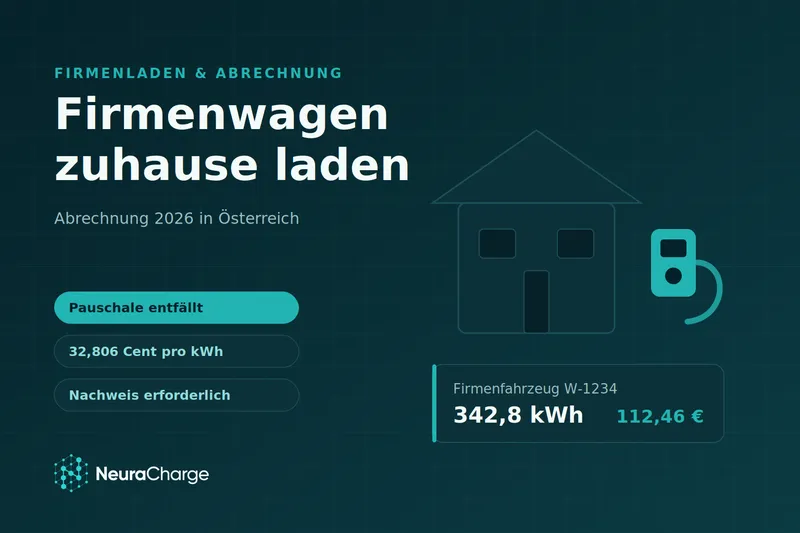
Home charging reimbursement 2026: rules for company cars in Austria
Since 2026 the €30 monthly flat rate is gone. Reimbursement stays tax-free only if the charged energy can be assigned to the company vehicle. What that means technically, and how the process works in practice.
Umut KayaCEO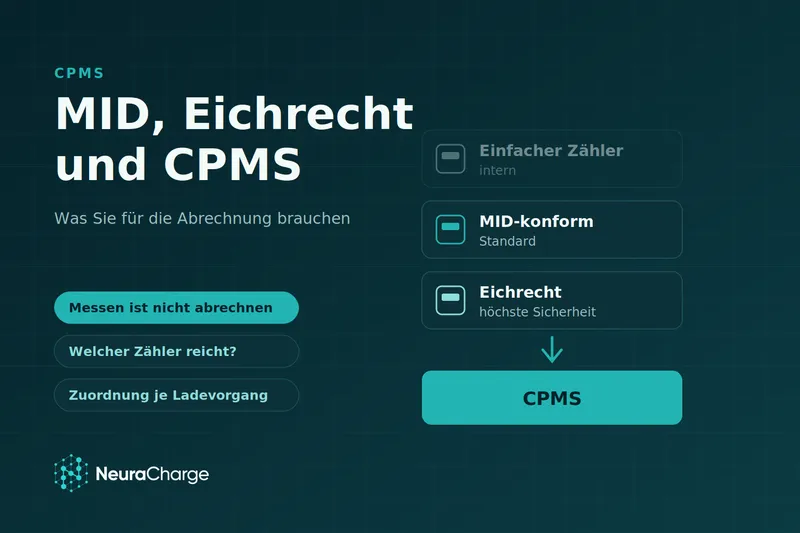
MID, calibration law & CPMS: what do I need to bill?
Anyone operating charging infrastructure quickly realizes that measuring electricity is one thing and billing it correctly is another. At the latest when employees, tenants, guests or company cars all charge via the same infrastructure, the question arises: which meter do I actually need? Is a simple energy meter enough? Do I need MID? And when does calibration law come into play?
But even with the right meter, the job is not done. The recorded charging data still has to be assigned to users, evaluated, billed and, where necessary, transferred to ERP, accounting or payroll systems.
That is exactly where a Charge Point Management System, or CPMS for short, comes in.
Umut KayaCEO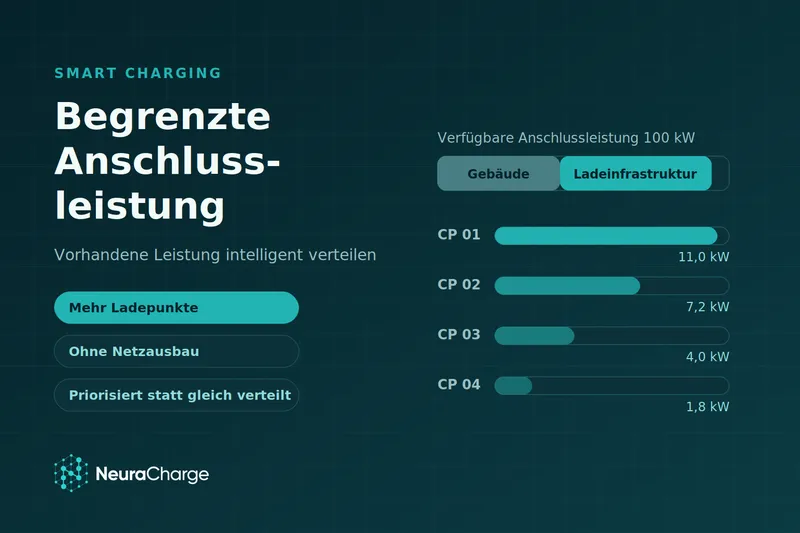
More charge points despite limited connection capacity: optimal utilization through intelligent load management
More charge points do not automatically mean more grid connection capacity is needed. Intelligent load management and real smart charging make it possible to distribute available power precisely, prioritize charging demand and significantly improve utilization of the charging infrastructure.
Umut KayaCEO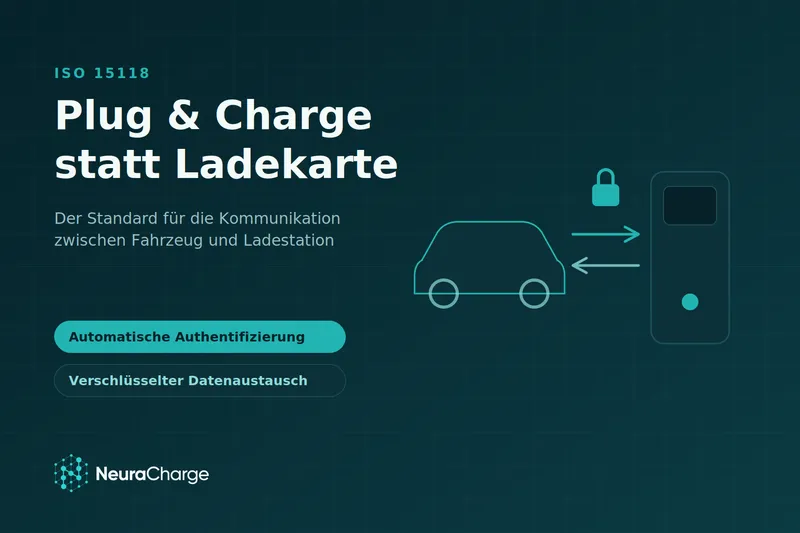
ISO 15118: The standard for intelligent communication between EVs and charging stations
ISO 15118 is an international standard that defines the communication between electric vehicles and charging stations.
Umut KayaCEO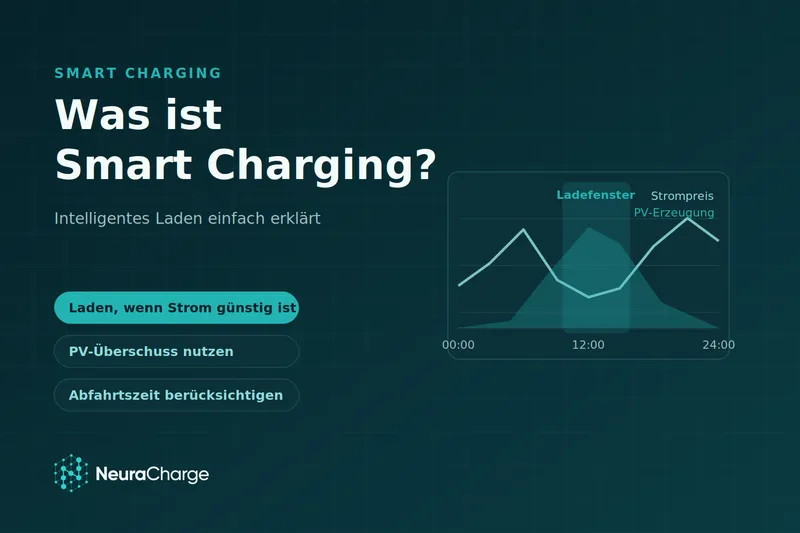
What is Smart Charging? Intelligent Charging Explained Simply
Smart Charging is a technology for intelligently controlling the charging process of electric cars. It takes into account electricity prices, available grid capacity, solar generation and individual departure times to charge more efficiently, more cheaply and in a grid-friendly way. Smart Charging optimizes charging processes automatically and reduces both costs and grid load.
Umut KayaCEO